When the Mailbox Feels Scary: Karen's Story of Financial Hope
The Wheel of Hope
Karen’s Story
Karen sat in the parking lot for almost 20 minutes before walking into the Life Center.
She wasn’t late. She was overwhelmed.
On her passenger seat sat a grocery bag filled with unopened envelopes — overdraft notices, late bills, and a utility warning. She already knew the cycle: avoid it → anxiety grows → fall further behind → feel ashamed → avoid it again.
Karen didn’t come asking for money. She came because she couldn’t keep living like that.
She told her Guide, almost apologetically, “I’m not bad with numbers… I just panic.”
That sentence explains why Money Management matters. Money problems are rarely math problems. They are decision-making problems under stress, and often identity problems.
Most people we serve understand basic financial principles. The difficulty is what happens emotionally when pressure rises. When a person is overwhelmed, their mind shifts into survival mode. Clear thinking fades, and planning, prioritizing, and delaying gratification become much harder. Bills feel threatening instead of manageable, so avoidance becomes a coping strategy.
The mailbox becomes frightening. Shame becomes normal. That is why the Life Center doesn’t offer “financial classes.” We mentor people.
At the same time, we don’t walk alone. As Heroes grow, we connect them with trusted partners, such as First Financial Bank and its Financial Literacy Program, and with Cincinnati Works for one-on-one Financial Coaching. These partnerships expand what a Guide begins — offering practical tools, expert insight, and community support. You’ll hear more in the days ahead about how these relationships strengthen the pathway to stability.
What the Wheel of Hope Teaches
Karen’s first assignment was simple: open every envelope. Not fix it. Do not pay it. Just open it — with her Guide beside her.
Together they made three piles: urgent, important, and can wait. For the first time, her situation felt organized instead of chaotic. That single step began rebuilding her planning and prioritizing skills.
Next, she learned to track spending — not to restrict herself, but to notice patterns. She discovered her money wasn’t disappearing; it was unplanned. Small, stress-relief purchases were quietly destabilizing her finances.
Then she created a basic spending plan: fixed bills, food, transportation, and a small personal allowance. The goal wasn’t perfection. It was structured.
Her Guide reframed the shame she was feeling: she hadn’t failed; she had never been taught a workable system. Financial stability isn’t about income first. It’s about structure.
More Than Budgeting
Three months later, Karen returned with another stack of mail — but this time she was smiling. “I open it now,” she said. “The anxiety is gone.”
Her bills weren’t magically gone. Her habits were different. She checks her account regularly, plans her groceries, pays bills in priority order, and communicates early with creditors. Most importantly, she no longer hides.
Good stewardship begins with belief: “I am capable of making wise decisions.”
That belief is both practical and spiritual. God entrusts people with responsibility because growth is possible. Emergency assistance alone often leads to a repeat crisis. Coaching plus accountability builds independence.
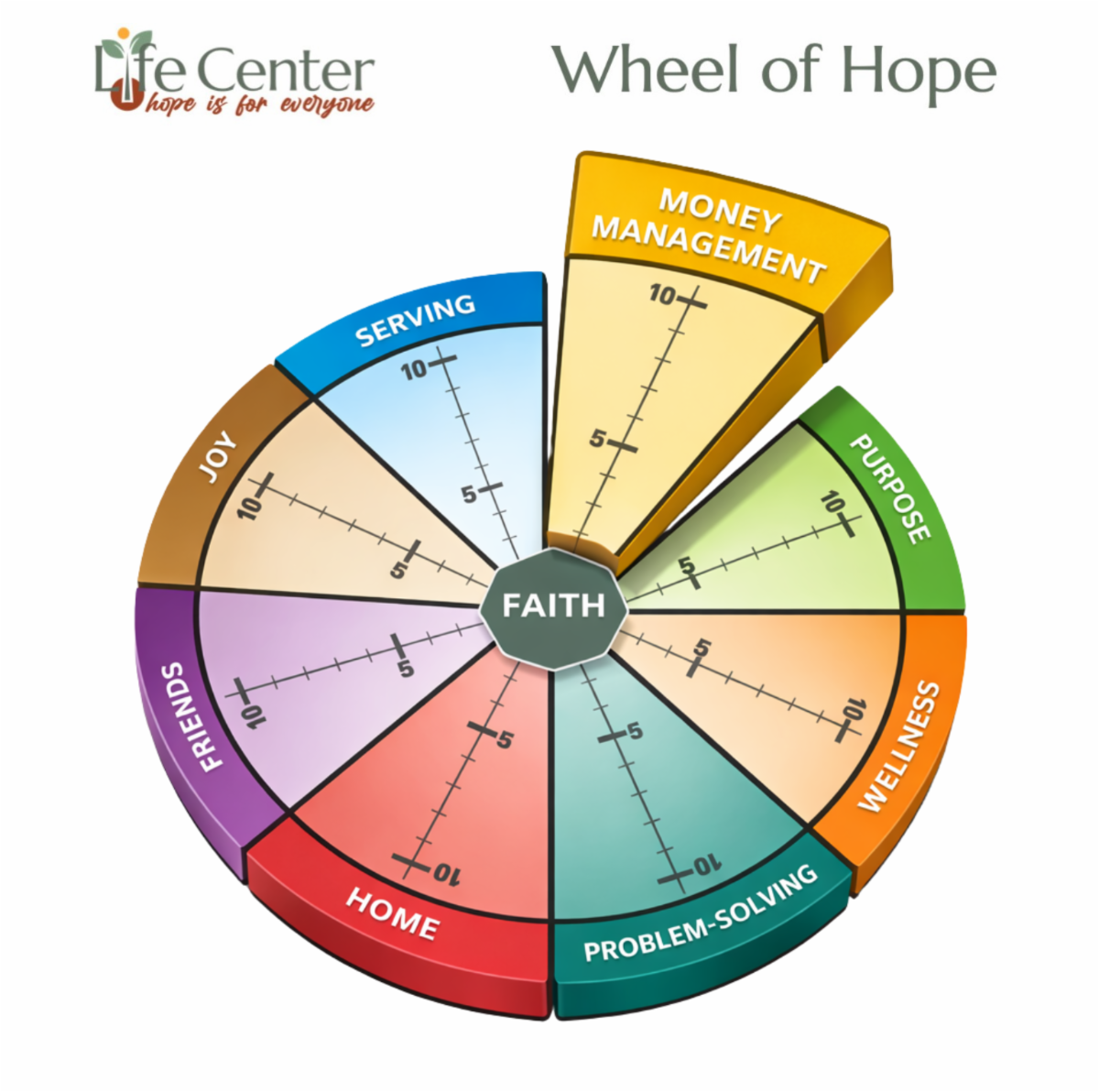
The Wheel of Hope is not primarily about budgeting. It is about rebuilding decision-making, personal agency, and dignity.
Karen recently told her Guide, “For the first time, I feel like a real adult.”
That is the mission — helping each Hero build a stable life, one wise decision at a time.